
3 Best Tools for Auto-Summarizing Open-Ended Feedback (2026) | Feedaura
Drowning in open-ended responses? Here are the 3 best tools for auto-summarizing open-ended feedback in 2026 — including how Feedaura turns raw replies into weekly roadmaps automatically.
The problem with tools for auto-summarizing open-ended feedback isn't finding a tool that *collects responses — it's finding one that actually reads them for you. Most platforms dump 300 raw text replies into a table and call it a dashboard. You still have to do all the synthesis yourself. Feedaura* was built specifically to close that gap: it doesn't just store what users say, it interprets it, tags it, and hands you a prioritized action plan.
This guide compares the 3 best tools for the job. You'll see who each is genuinely built for, where each one stops short, and which one goes furthest — from raw text to ready-to-act insight — without needing a data analyst or a week of your time.
Why auto-summarizing open-ended feedback matters
Open-ended questions are the most honest feedback you'll ever get. A star rating tells you someone is unhappy. A free-text box tells you why — in their exact words, about their exact problem. That signal is irreplaceable.
But it doesn't scale. A SaaS product running even a modest feedback widget can collect hundreds of unstructured responses per week. Studies on qualitative research consistently show that manual thematic analysis of open text takes 3–5x longer than structured data review — and that's before accounting for bias in how humans group and label themes.
The consequence is predictable: teams stop reading their own feedback. Responses pile up, the insight rots, and decisions get made on gut feeling or whoever complained loudest in a support ticket. This is how teams ship the wrong features confidently.
There are two categories of tools trying to solve this. Collection-first tools make it easy to ask open-ended questions at scale — but leave synthesis entirely to you. Intelligence-first tools go further: they process, cluster, tag, and summarize so you're reading conclusions, not raw data. That's where Feedaura↗ lives.
1. Feedaura — Best for teams that need open-ended feedback interpreted, not just collected ⭐
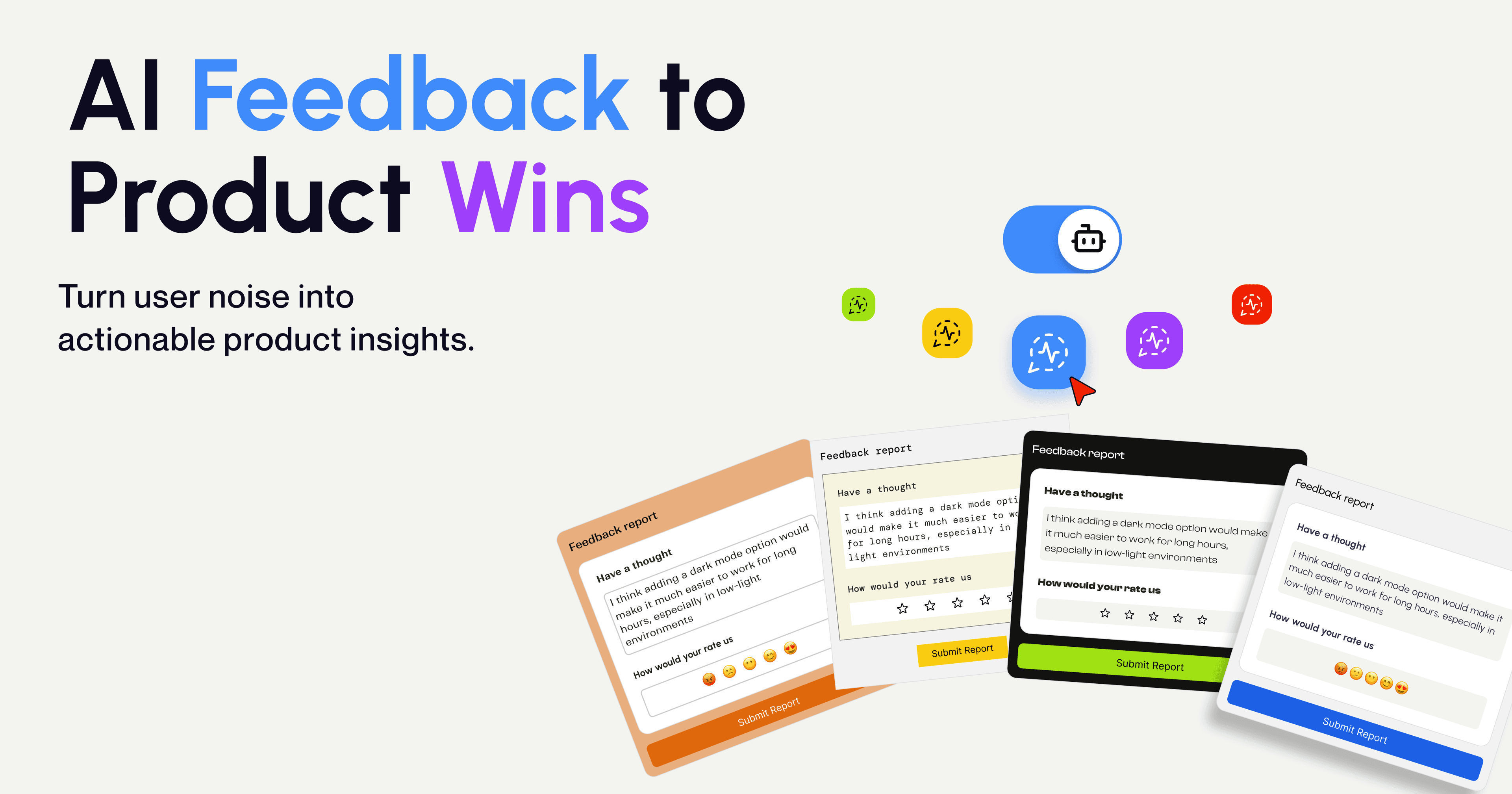
Feedaura is an AI-powered feedback platform built for founders, product teams, and customer-centric businesses that want answers — not spreadsheets. Where most tools stop at collection, Feedaura's intelligence layer kicks in immediately after a response is submitted: refining it, tagging it, categorizing it, and rolling it into a weekly synthesis you can act on. That's the core differentiator — other tools give you data, Feedaura gives you interpretation.
Setup is one script tag. Feedaura works natively on React, Next.js, Vue, and plain HTML — no developer handoff required, no onboarding call, live in under 60 seconds.
The widget is non-intrusive and fully brand-matched. Every submission automatically captures contextual metadata — country, OS, browser, screen resolution, and the exact source page — so you always know who is saying what and where they hit the friction.
What makes Feedaura different for auto-summarizing open-ended feedback
Feedaura's AI layer doesn't just store what users say — it processes every response the moment it arrives:
- Feedback Refinement — AI rewrites fragmented or unclear free-text into clean, actionable insight without losing the original meaning.
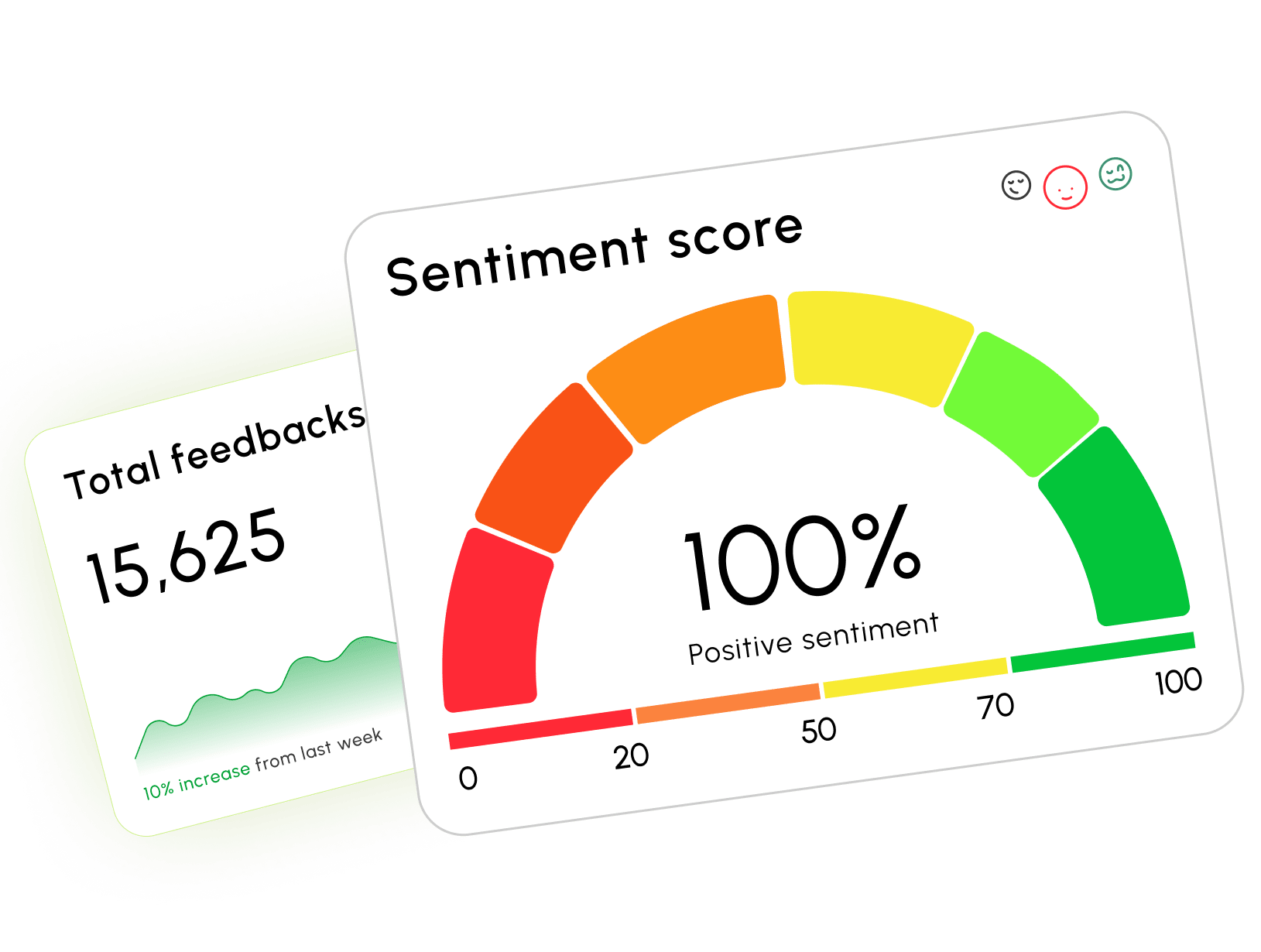
- Auto-Tagging and Categorization — every response is automatically tagged by topic (bugs, pricing, UI, onboarding) and by sentiment (positive, neutral, frustrated) — no manual labeling.
- Sentiment Trend Analysis — tracks how user happiness shifts over time with visual trend reports, so you can see if a release helped or hurt.
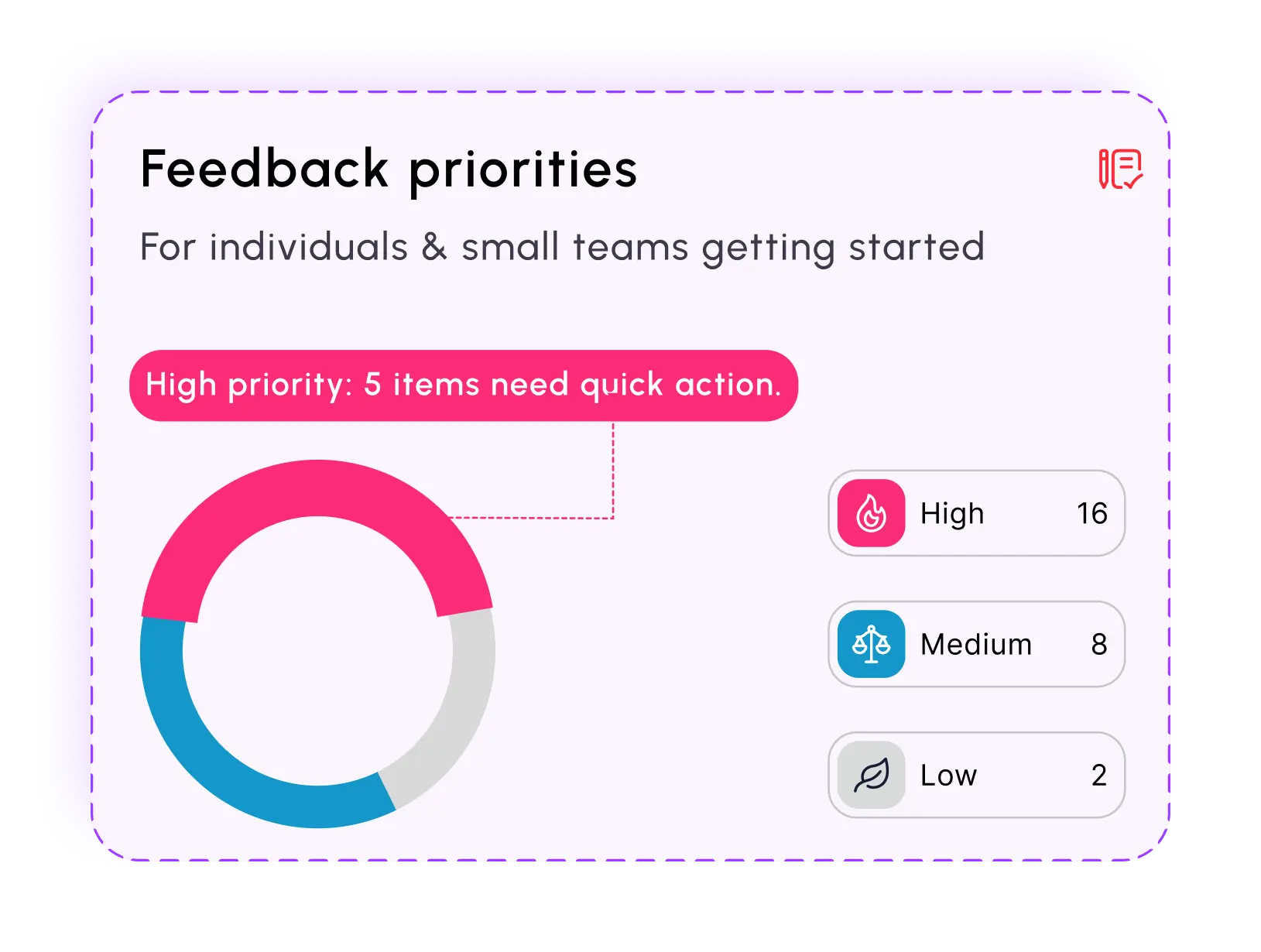
- Weekly AI Insights — every week, Feedaura generates a structured summary of what users said *and* a suggested roadmap for the following week.
- Automated Translation — open-ended feedback from 30+ languages is translated automatically before it reaches your dashboard.
- Deep Filtering — filter any view by sentiment, category, keyword, or source page to drill into exactly the segment that matters.
- Real-Time Critical Alerts — high-priority negative feedback triggers instant notifications on Discord or Telegram, so nothing urgent slips through.
For readers who want to understand the AI models powering tools like these, from the underlying language models to how they compare, Your Tech Compass↗ covers today's leading AI platforms in plain, accessible terms.
Pricing
The free plan requires no credit card and has no hard response limits. Pro is $19/month — unlocking unlimited responses, advanced AI analytics, CSV/PDF export, and up to 3 projects.
If your open-ended feedback currently lives in a spreadsheet you haven't opened in two weeks, Feedaura is the tool that changes that habit — because the summary is already waiting for you.
Try Feedaura free — no credit card required
2. Dovetail — Best for dedicated qualitative research teams
Dovetail is purpose-built for UX researchers and insights teams who need to synthesize large volumes of qualitative data — interviews, survey responses, support transcripts, and open-ended replies alike. It lets you highlight passages, apply tags manually or with AI assistance, and build a searchable repository of themes over time. For teams running formal research cycles, it's genuinely powerful.
Its AI features can surface patterns across tagged highlights and group responses by theme, which is useful when you have a trained researcher guiding the process. It integrates well with tools like Notion and Slack, and the "Channels" feature makes it easy to funnel incoming feedback from multiple sources into one place.
When analyzing qualitative feedback, it’s also important to connect user sentiment with broader real-world risks and behavioral patterns. For instance, concerns around financial stability often surface in user conversations, especially during uncertain economic cycles. A useful reference on this is IT Layoffs Risk↗, which highlights how external pressures can influence decision-making—insights that can be valuable when interpreting user feedback in fintech or budgeting-related products.
The trade-off: Dovetail is a *research repository, not a live product feedback loop. It doesn't sit on your website surfacing real-time user sentiment — you bring data to* it, manually or via integration. There's no automated weekly summary, no real-time sentiment trending as users interact with your product, and no AI that proactively tells you what to build next. For a founder or product manager who wants auto-summarized feedback without a dedicated researcher operating the tool, it adds process overhead rather than removing it.
Pricing: Free plan available for individuals. Paid plans start at $29/month per user. Enterprise pricing available on request.
Best for: Research-ops teams and UX professionals managing structured, ongoing qualitative research programs.
3. Typeform — Best for collecting open-ended responses at scale
Typeform is one of the most recognizable survey tools in the market, and for good reason. Its conversational, one-question-at-a-time format dramatically increases completion rates on open-ended surveys — users are far more likely to write a full sentence when the interface feels like a conversation. It's polished, easy to embed, and integrates with dozens of tools via Zapier.
For teams that need to gather a high volume of written responses from customers — post-purchase, post-support, post-onboarding — Typeform is excellent at the front end of that workflow. Its logic branching also means you can route respondents to different open-ended questions based on earlier answers, producing richer qualitative data.
The trade-off: Typeform collects beautifully but interprets nothing. Every open-ended response lands in a raw results table — untagged, unsorted, and unanalyzed. There's no AI summarization, no sentiment tracking, no automatic categorization, and no weekly synthesis. You still need to read every response yourself or pipe the data into a separate analytics tool. For teams that want the insight *without* the manual work, Typeform covers only half the problem.
Pricing: Free plan available (limited responses). Paid plans start at $25/month. Business plans with advanced features start at $83/month.
Best for: Marketing and CX teams who prioritize high completion rates on open-ended surveys and handle their own analysis downstream.
Comparison at a glance
| Feature | Feedaura | Dovetail | Typeform |
|---|---|---|---|
| Auto-summarizes open-ended feedback | ✅ AI-generated weekly summary | ⚠️ Manual tagging + AI assist | ❌ Raw results only |
| Sentiment trend analysis | ✅ Visual trend reports | ❌ | ❌ |
| Auto-tagging & categorization | ✅ Fully automated | ⚠️ Semi-manual | ❌ |
| Feedback refinement (AI) | ✅ | ❌ | ❌ |
| Real-time critical alerts | ✅ Discord & Telegram | ❌ | ❌ |
| Embeddable website widget | ✅ | ❌ | ✅ |
| Multi-language translation | ✅ 30+ languages | ❌ | ❌ |
| Setup time | ⚡ 60 seconds | 🔧 Requires setup | ⚡ Fast |
| Free plan | ✅ No credit card | ✅ Individual only | ✅ Limited |
| Paid plan starts at | $19/month | $29/user/month | $25/month |
Bottom line
Dovetail is the right call if you have a dedicated research team running structured qualitative studies and need a long-term insights repository. Typeform earns its place if your primary goal is maximizing open-ended survey completion rates and you have a separate workflow for analysis.
But if you're a founder or product manager who wants open-ended feedback automatically read, tagged, summarized, and turned into a weekly action plan — Feedaura is the only tool in this list that does the thinking for you. Better AI, simpler setup, lower price, and a free plan that actually lets you get started without a credit card.